Pleat
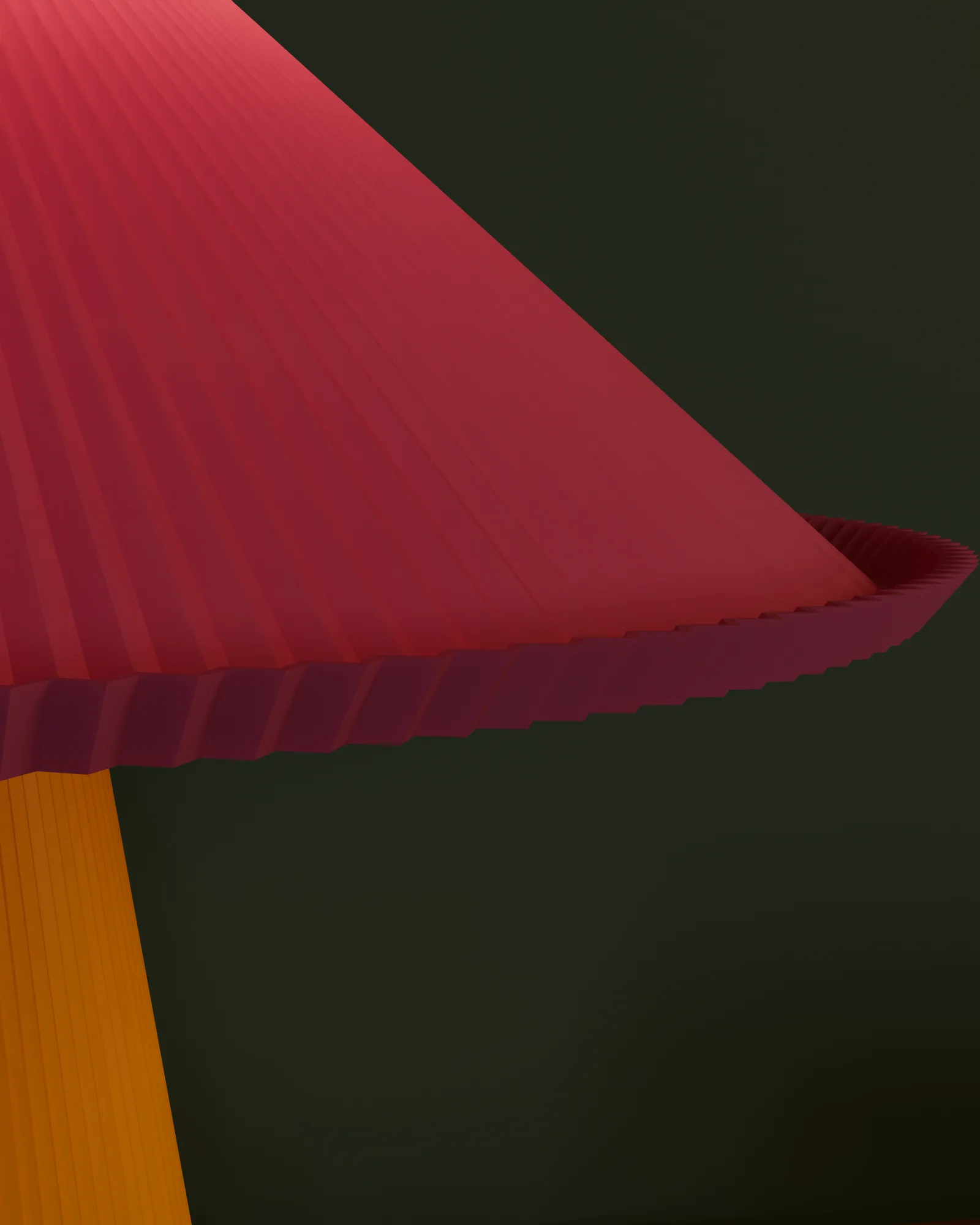
Paper lanterns taught us that light looks best when it has something to pass through. Pleat is that idea, printed. Its shade is a skin folded 144 times, so when it's on, every fold catches the light.
Fourteen ways
to glow.
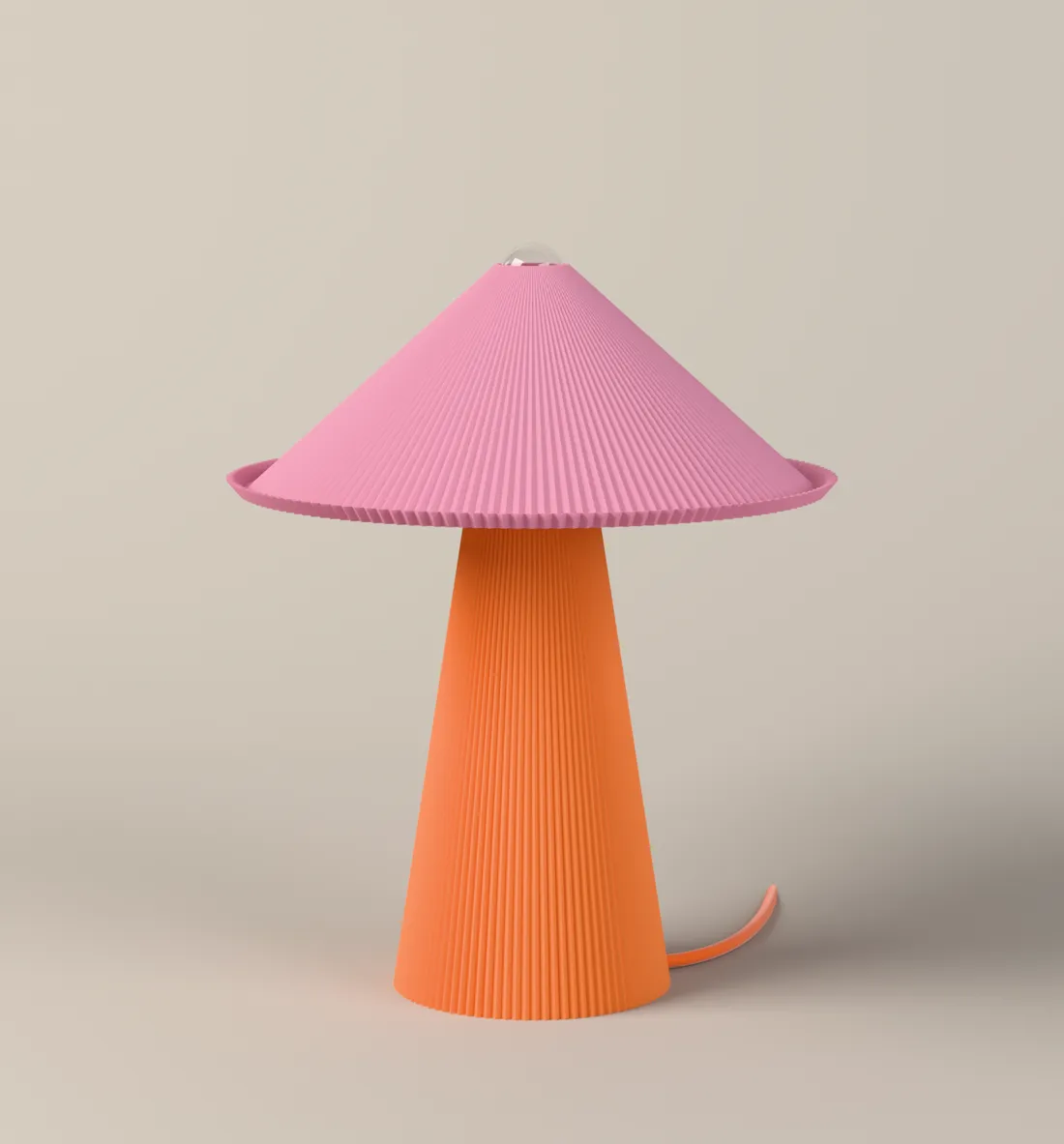
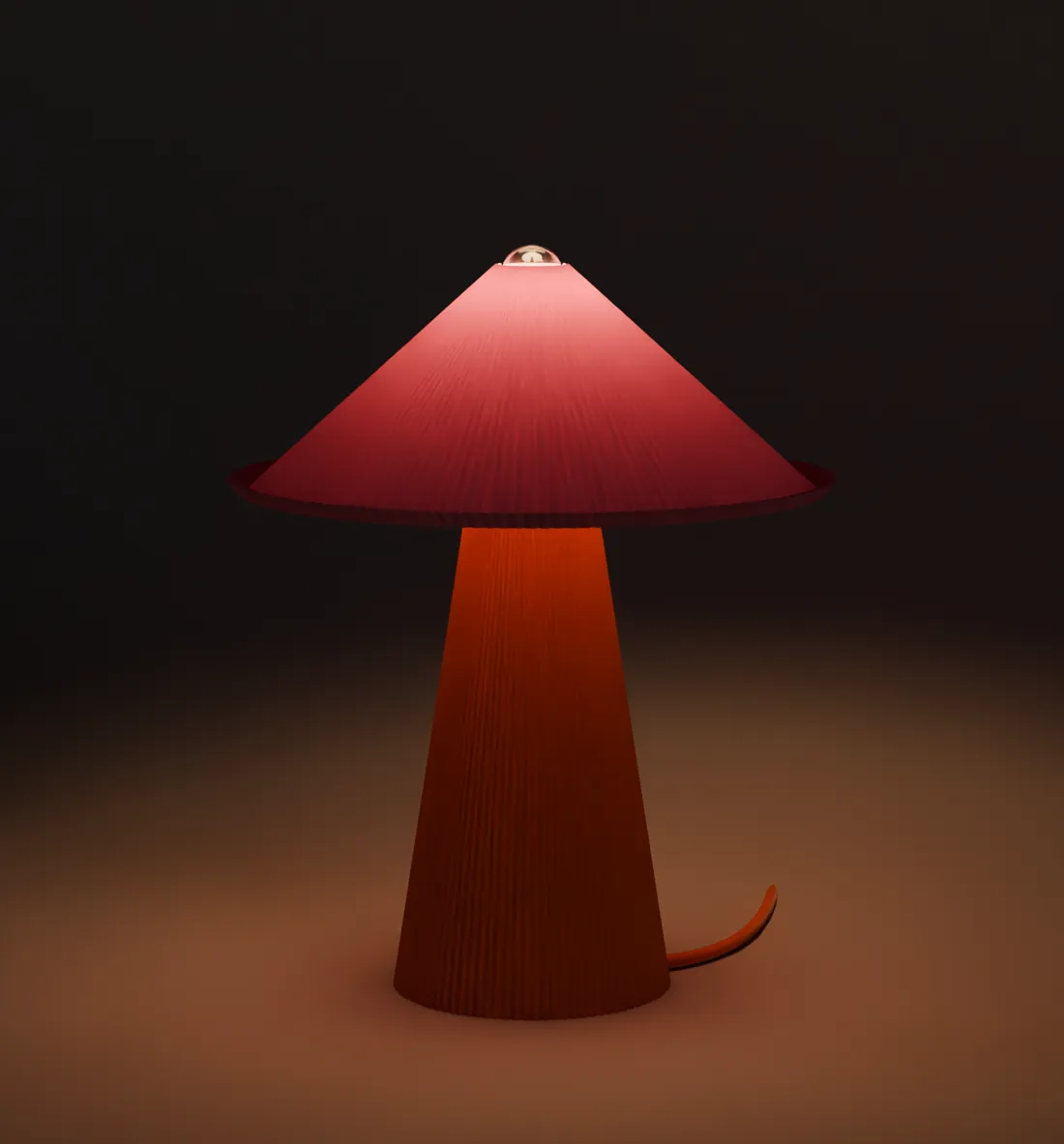
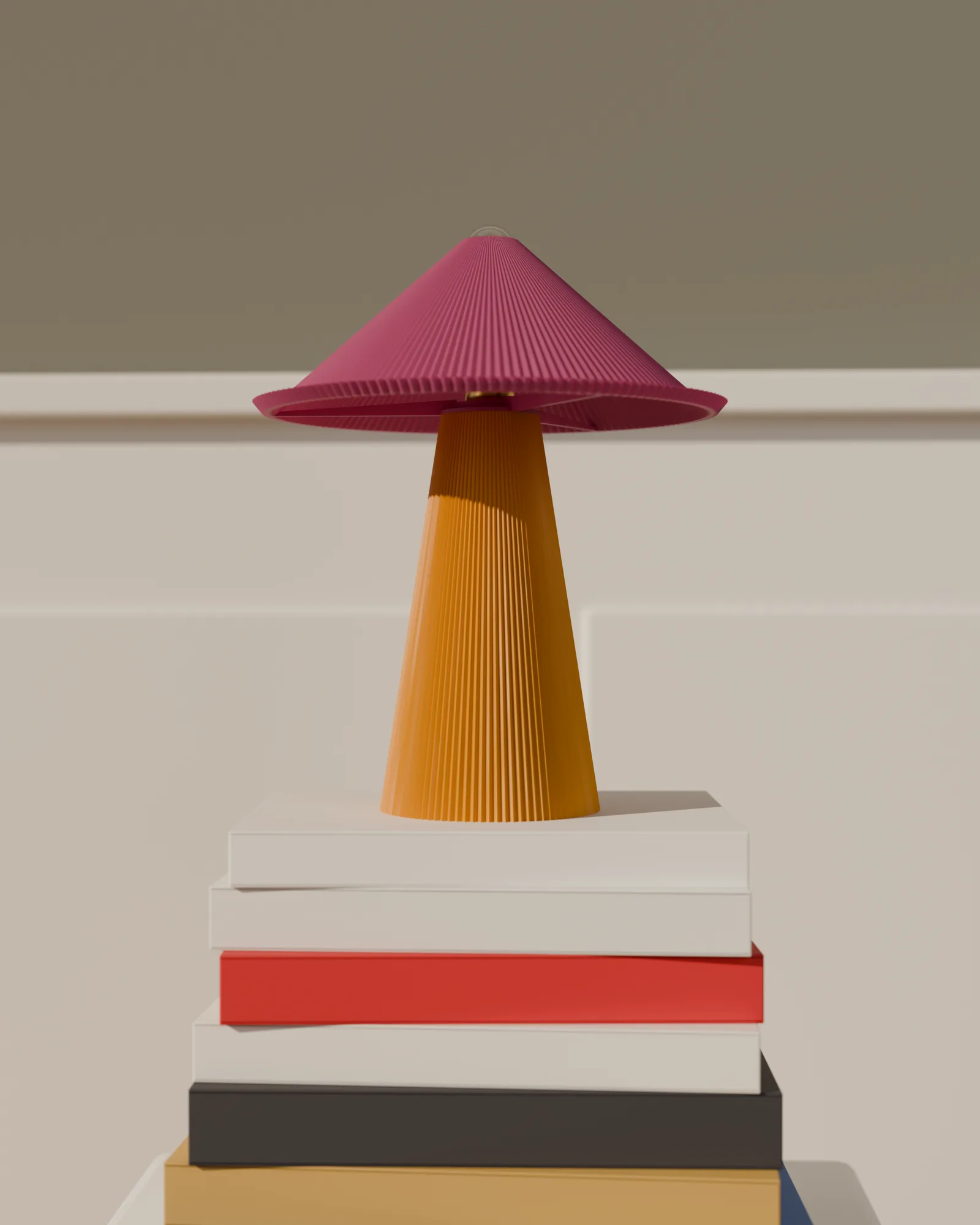
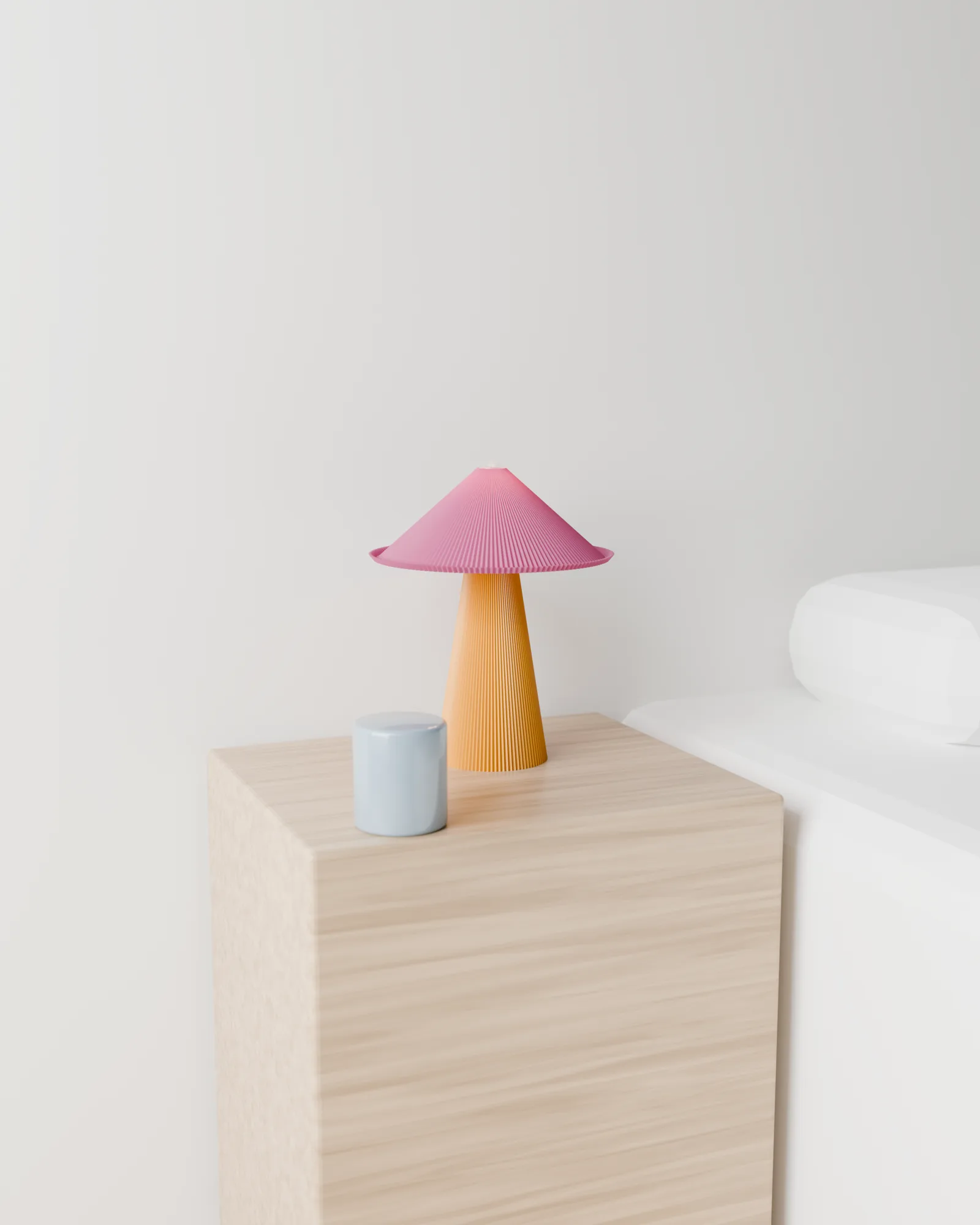
Every pairing printed in PLA Matte. Pick a base, pick a shade, and see it in daylight or switched on.
Lives anywhere
you do.
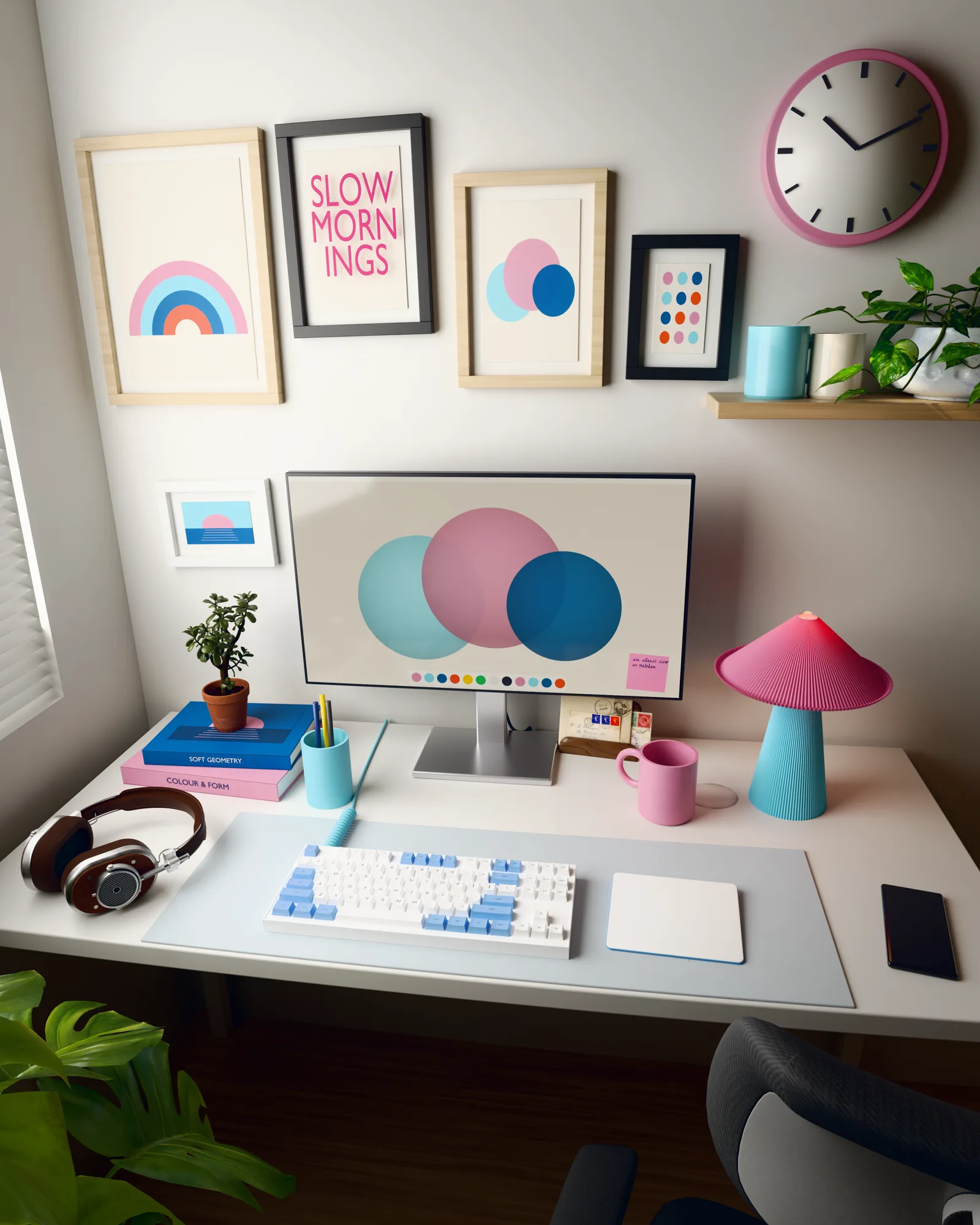
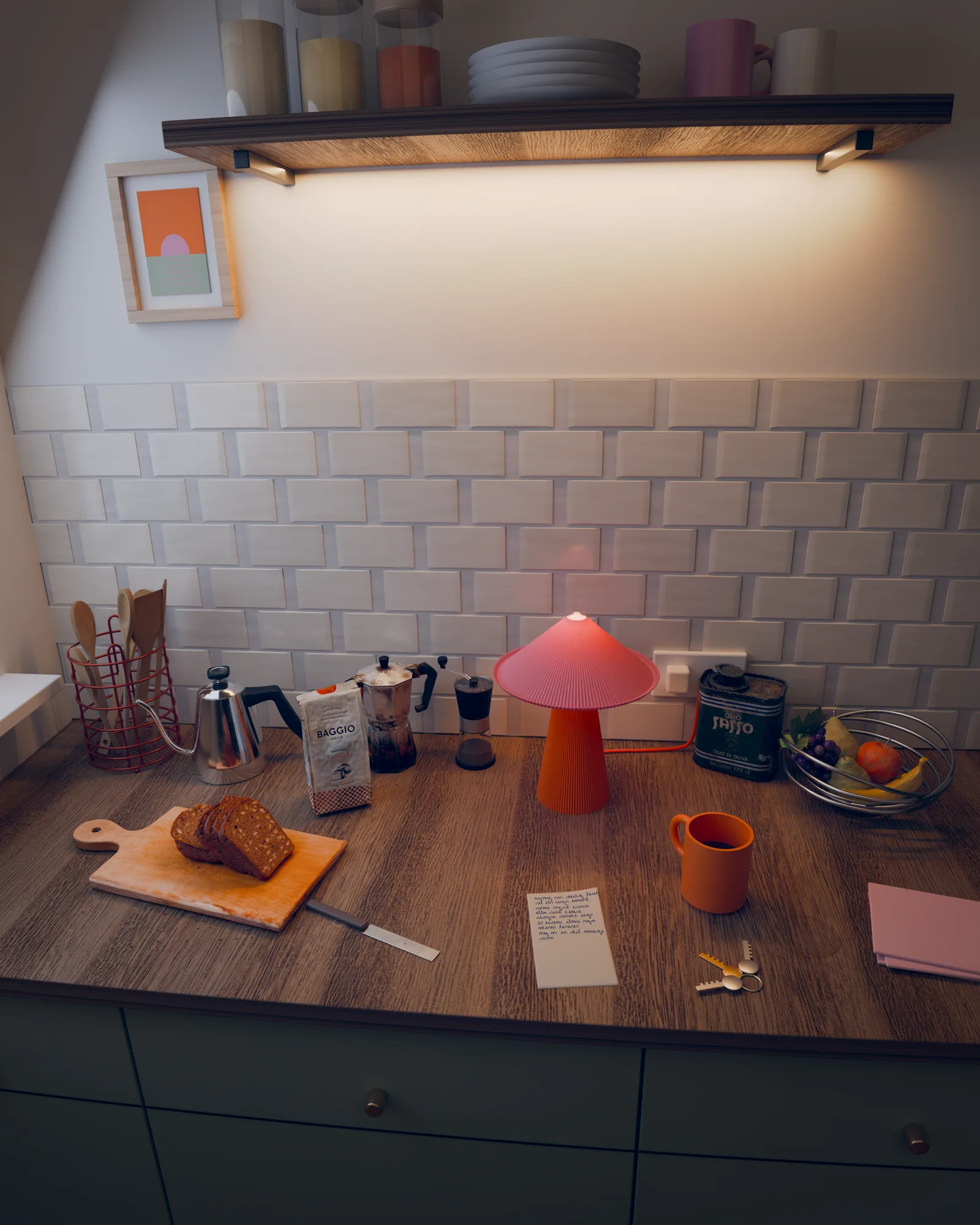
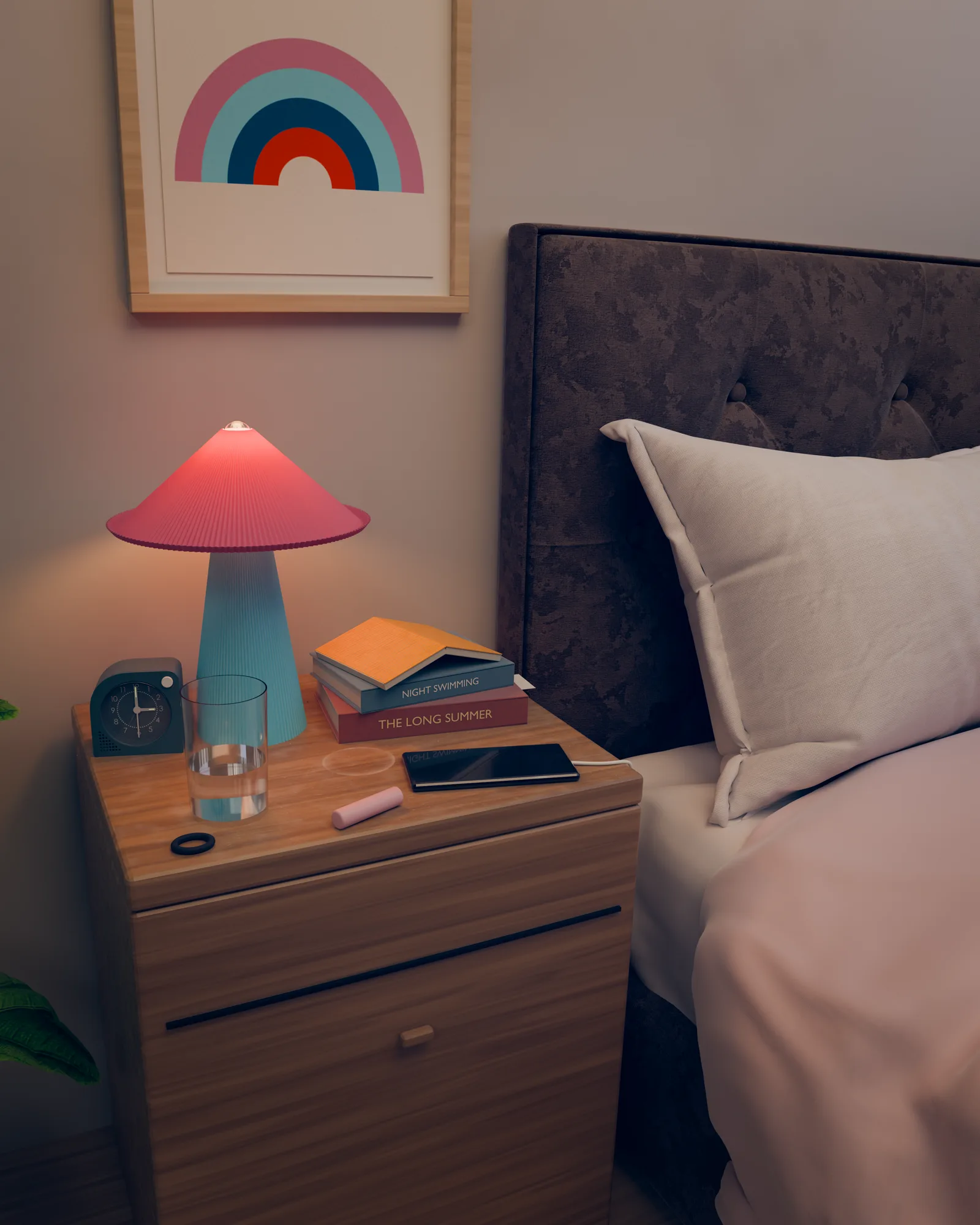
A desk at nine. A nightstand at eleven. A café full of strangers. It looks like it was always there.


Four parts.
No glue.
- A
The shade
Ø240 × 88 mm. 144 pleats on both sides, 0.8 mm across each face: exactly two 0.42 mm wall lines. Light passes through it evenly.
- B
The lock ring
A hex skirt slides up the base's hex tube, so the socket can't spin while you screw the shade on. Its coned top seats under the plate.
- C
The plug
M16, headless, with a coin slot. It seals the ballast chamber flush with the floor, so the base still sits flat.
- D
The base
Ø112 × 200 mm, 90 pleats. Inside, a sealed 620 cm³ chamber for sand or steel shot.
Three arms.
Zero shadows.
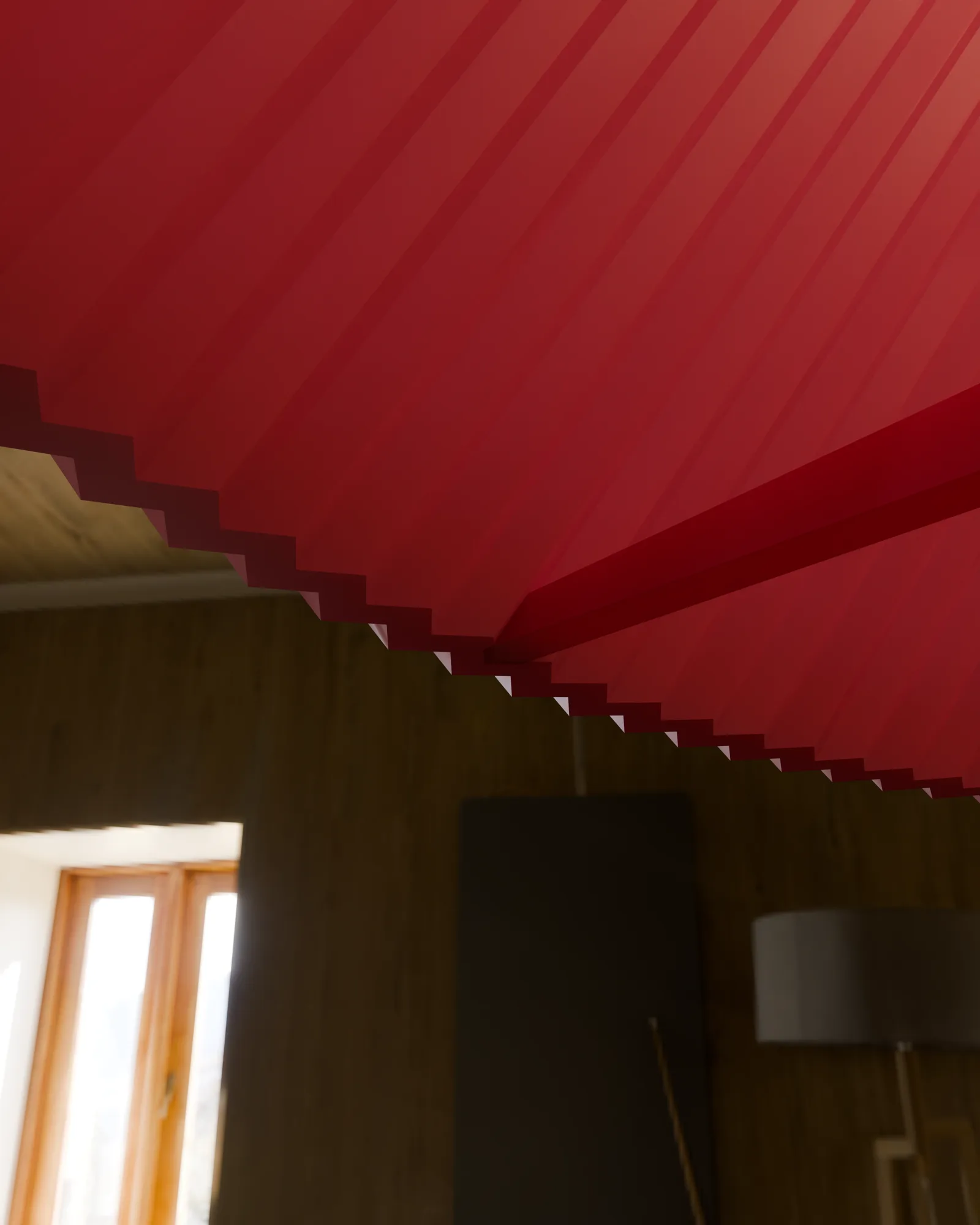
The shade holds itself up on three flat arms that run from a threaded hub out to the rim, below the bulb. So when it glows, nothing on the inside casts a line across the pleats.
Arms taper from 8 mm at the hub to 2 mm at the rim.